Concreting in Frankston and the Peninsula
Concreters Frankston: Driveways, Slabs, Repairs and Decorative Concrete
Peak Concreting Frankston pours, repairs and resurfaces concrete for homes and businesses across Frankston, the bayside suburbs and the northern Mornington Peninsula. Every job starts with a look at the ground and ends with a fixed written quote, so the price is clear before any work begins.
GET A FREE QUOTE
Concreting Services
Concrete Frankston Services: Driveways, Resurfacing, Repairs and More
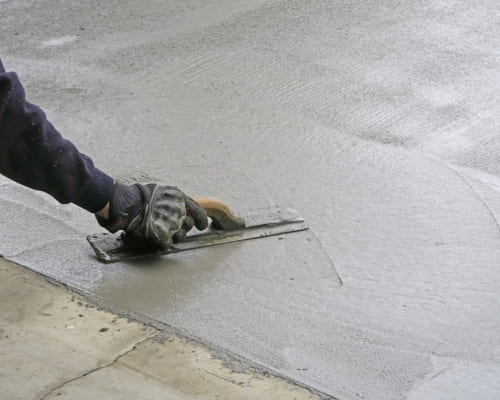
Plain, exposed aggregate and coloured concrete driveways built on a compacted base with steel reinforcement and planned joints, so the driveway carries its load and resists cracking for decades. Fixed written quotes.
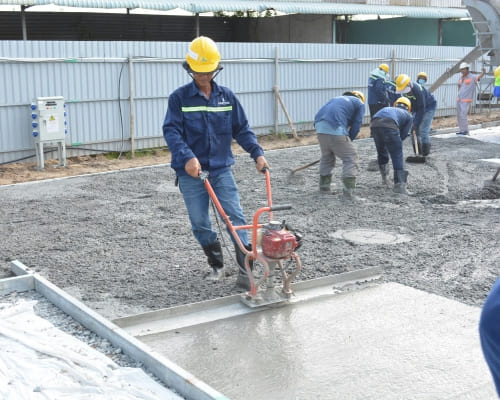
House, shed, garage and extension slabs, plus the footings that carry them, designed to the site's soil classification and poured with the right reinforcement and vapour barrier. Fixed written quotes.
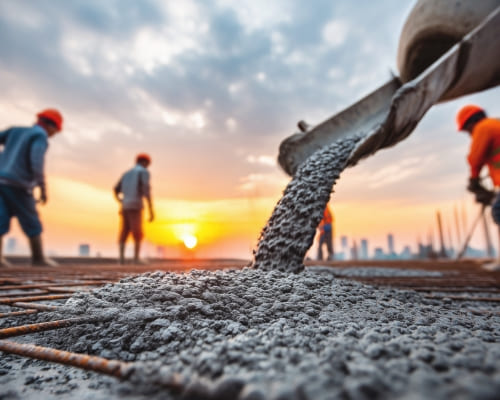
Textured, slip-resistant exposed aggregate driveways, paths, patios and pool surrounds, washed back to reveal the stone and sealed to hold its colour. Stone blends compared on site and fixed written quotes.
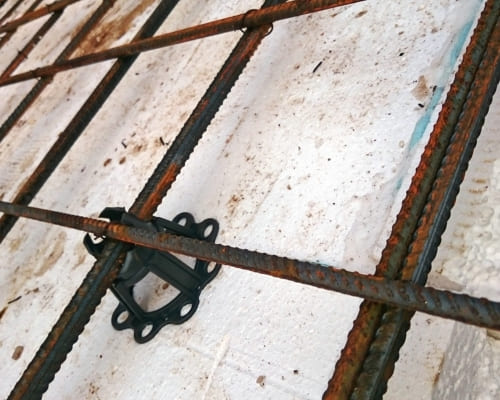
Front paths, side access, footpaths and garden walkways built on a compacted base with mesh, the right fall for drainage and a broomed or decorative finish. Fixed written quotes and tidy work.
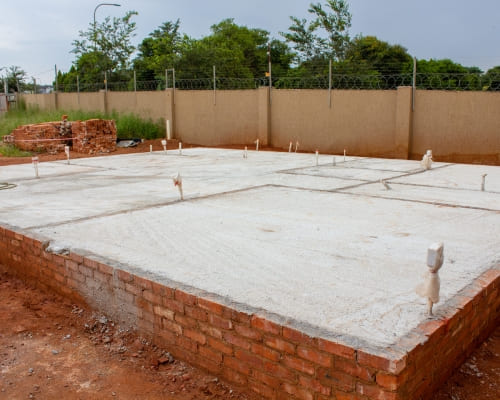
Garden edging, mower strips, driveway kerbs and car park kerbing, formed in one continuous line on a proper base so it will not rot, lift or rust like timber or plastic. Priced per lineal metre.
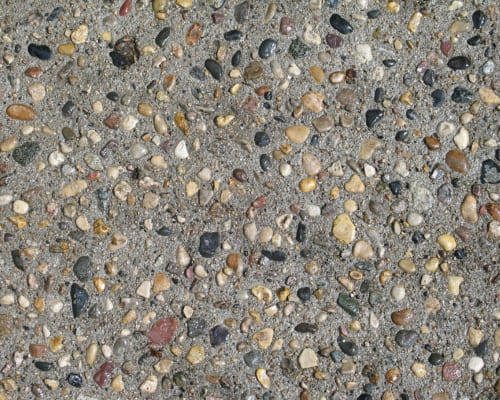
Crack, spalling, concrete cancer and sunken-slab repairs, with the cause found first and an honest call on repair, resurface or replace. Fixed written quotes for repairs that last.
Concrete sleeper, core-filled block, poured and panel retaining walls with footings, steel and drainage sized to the height and the soil behind them. Fixed written quotes for walls built to hold the slope.
Ground and polished concrete floors for homes, garages and small commercial spaces, from a cream finish to full stone exposure and matte to high gloss. Fixed written quotes and an even, consistent sheen.
Sealing for driveways, paths, exposed aggregate and decorative concrete, with the right sealer applied over a properly prepared surface to resist oil, stains, water, salt and fading. Honest resealing advice.
A tired but sound slab given a new surface with a bonded overlay, finished spray-on, stencilled or trowelled in a choice of colour, for a fraction of the cost of replacement. Fixed written quotes.
Coloured concrete driveways, paths and outdoor areas tinted through the mix in charcoal, grey, sandstone or terracotta tones to suit the home, then sealed to protect the colour. Fixed written quotes.
Honed concrete for alfresco areas, pool surrounds and entries, ground to a smooth, stone-like matte finish and sealed with an anti-slip additive so it keeps its grip outdoors. Fixed written quotes.
Stamped concrete driveways, patios and pool surrounds with the look of slate, stone, brick or timber pressed into a coloured pour, in one continuous slab with no gaps for weeds. Patterns shown on site.
Concreting Frankston: Finishes, Specs, Weather and Upkeep
Concreting in Frankston covers more ground than most people expect, in both senses. The work runs from a plain path down the side of a house to a long driveway on a Moorooduc acreage, and the soil changes from loose bayside sand to wet former swampland to reactive clay within a short drive. The guide below explains the finishes on offer, where each type of concrete is used, how strength and thickness are chosen, how the bayside weather affects a pour, and how to keep concrete in good order once it is down.
Concrete finishes and decorative options
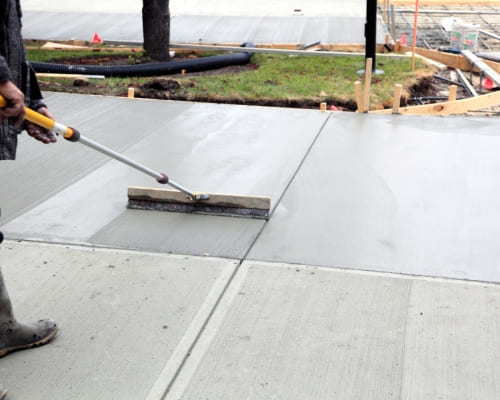
Plain concrete with a broom finish is the standard for side paths, shed slabs and work areas: it is the most affordable surface, it grips well in the wet and it is quick to lay. Where the concrete is part of how the house looks, a decorative finish is usually chosen. Exposed aggregate washes back the top layer of cement to show the stones underneath, and is the most popular driveway finish around Frankston because it hides wear and gives a non-slip surface. Coloured concrete adds an oxide through the mix so the colour runs right through the slab. Stamped concrete presses a pattern such as stone or slate into the surface while it is still workable. Honed concrete is ground back to a smooth, satin face for alfresco areas and pool surrounds, and polished concrete is ground and refined further, mostly for indoor floors. Each finish suits a different use and budget, and the right one depends on where the concrete sits and how it will be used.
Concrete for homes, acreage and commercial sites
Around Frankston's established suburbs, most residential work is renewal: replacing a driveway poured decades ago, widening it for a second car, or adding paths, patios and carport slabs to an older house. New homes in growth areas such as Skye and Langwarrin need first-time driveways, paths and alfresco slabs. Further down the Peninsula, the larger blocks in Moorooduc, Langwarrin South and Mount Eliza bring a different scale of job: long driveways, rural crossovers and shed or machinery slabs. Sloping blocks often need concrete retaining walls to hold the ground before any slab goes in. Commercial and light industrial sites, including the industrial areas around Carrum Downs and Hastings, call for hardstands, car parks, kerbing and heavier-duty floors. The same basics apply to all of them: the base is prepared for the ground, the slab is designed for the load it will carry, and the finish is chosen for how the surface will be used.
Concrete strength, reinforcement and thickness
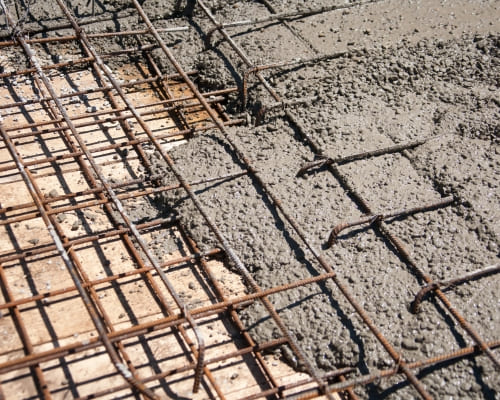
Concrete is ordered by strength, measured in megapascals (MPa). Residential driveways, paths and slabs are commonly poured at 25 to 32 MPa, with the higher grades used where vehicles, heavier loads or coastal exposure call for extra durability. A standard driveway for cars is usually around 100mm thick, laid on a compacted crushed-rock base and reinforced with steel mesh to hold cracks tight, with thicker sections and heavier reinforcement where trucks, caravans or boats will park. Concrete slabs and footings for sheds, garages and extensions are designed for the load and the soil class of the site, which is why reactive clay inland and loose sand near the bay are treated differently. Control joints are cut or formed at set spacings so that the shrinkage every slab goes through as it cures happens along a straight line rather than as a random crack. Getting these specifications right at the start costs far less than replacing a slab that was laid too thin or on a poor base.
Pouring and curing in bayside wind and winter rain
Frankston's weather affects how concrete is poured. Hot days and the dry northerly winds of summer pull moisture out of fresh concrete quickly, which can cause fine surface cracking known as plastic shrinkage. On those days the pour is booked for the cooler early morning, the surface is protected from wind and sun, and the slab is kept moist while it cures. Winter brings the opposite problem: cold, wet weather slows the set and makes finishing harder, so pours are timed around the forecast and fresh concrete is covered against heavy rain. Close to the bay, salt in the air and persistent moisture mean that properly compacted, well-cured concrete with adequate cover over the steel matters more than it does inland. As a general guide, a new driveway takes light foot traffic after a day or two and cars after about a week, while the concrete keeps gaining strength for around 28 days.
Sealing, resurfacing and when to repair
Once concrete is down, the right care keeps it looking good for decades. Concrete sealing protects decorative finishes such as exposed aggregate and coloured concrete from oil, tyre marks, salt and fading, and is usually renewed every few years depending on traffic and sun exposure. When an older driveway or patio is structurally sound but tired, stained or dated, concrete resurfacing applies a thin overlay that gives it a new surface and colour without breaking out the slab. When concrete has cracked, sunk or lifted, concrete repairs can fill and seal cracks, grind down trip edges and patch spalling, provided the base underneath is still sound. If the slab has failed across a large area or the ground beneath has moved badly, replacement is usually the better long-term option. An on-site look at the slab is the only reliable way to tell which of these is the right call.
What Concreting Costs in Frankston
Concreting in Frankston is priced mainly by the square metre, but the rate for one job can be very different from the next. The finish, the size of the area, access for trucks and pumps, the ground underneath and any old concrete that has to come out all change the number. That is why every quote is written after an on-site look, and why a price given over the phone without seeing the site is rarely reliable. The sections below explain how the finishes compare and which site factors move a quote.
How the finishes compare on price
Plain broom-finished concrete is the most affordable finish and the usual choice for side paths, shed slabs and work areas. Coloured concrete costs a little more because of the oxide in the mix. Exposed aggregate sits above that, as it needs a decorative stone blend and extra finishing work, and stamped concrete is usually higher again because of the labour involved in patterning and sealing. Honed and polished concrete add grinding stages, so they are priced by the finish level chosen. Sealing adds a smaller cost that protects the investment. For an older slab in good condition, resurfacing usually costs less than a full replacement because there is no demolition or new base. Every quote sets out the finish, the area and what is included, so different options can be compared side by side.
What moves a Frankston quote up or down
The ground is the first factor. A slab on the loose sands near the bay needs a well-compacted base, while soft, wet ground in Seaford, Carrum Downs or Waterways may need extra excavation, more crushed rock and a moisture barrier, and reactive clay inland calls for deeper edges and heavier reinforcement. Removing an old driveway adds demolition and disposal costs. Access matters too: a short run from the street is quicker than barrowing concrete down a narrow side path or pumping it to the back of a block. Sloping blocks in Mount Eliza and Mount Martha can need retaining or cut-and-fill before any pour. Larger areas usually cost less per square metre than small ones, because setup and delivery costs are shared across more concrete. A new or altered crossover also needs a council permit, which is arranged as part of the job.
Common Concrete Problems in Frankston
Most concrete failures around Frankston come back to the ground under the slab, and that ground changes quickly between the bay and the higher land inland. Knowing which type of ground a property sits on is the best way to understand why concrete there has failed, and how to stop a new slab doing the same. These are the problems seen most often across the area.
Settlement on the loose bayside sands
The coastal strip from Seaford through Frankston to Mornington sits largely on dune sands and the older Red Bluff Sands. These sands drain well and barely swell or shrink, but they are loose, and concrete laid on a poorly compacted base settles unevenly under load. The usual signs are a driveway that dips where cars park, paths that sink away from the house and cracks running across the slab. Proper compaction of a well-graded crushed-rock base, and thickened edges where the slab carries weight, stop this from happening on a new pour.
Soft ground and a high water table on the old swamp flats
Large parts of Carrum Downs, Seaford, Chelsea Heights and Waterways were built on the drained Carrum Carrum Swamp and its wetland fringes. The ground there is soft and variable, and the water table sits close to the surface for much of the year. Concrete on this ground can sink, crack or stay damp, and water sitting under a slab weakens the base over time. A deeper, well-compacted base, a moisture barrier under the slab and drainage that carries water away from the concrete all protect a new pour.
Cracking on the reactive clay inland
Moving inland and uphill towards Langwarrin, Frankston South and parts of Skye, the sand gives way to heavier loams and reactive clay that swell when wet and shrink when dry. That seasonal movement lifts and drops slabs and opens cracks, especially where gardens or downpipes keep one side of the concrete wetter than the other. Slabs on reactive clay need deeper edge beams, the right reinforcement and well-placed control joints, along with drainage that keeps the moisture under the slab even.
Tree roots and ageing post-war slabs
Much of Frankston, Frankston North and Karingal was built in the post-war decades, and many driveways and paths there are fifty or more years old. Thin slabs laid without mesh, roots from mature street and garden trees, and decades of weather show up as lifted edges, trip hazards, broken sections and worn, spalling surfaces. Some of this can be repaired or resurfaced, but where roots have lifted large sections or the slab has broken up, replacement with a properly prepared base is the lasting fix.
Why Choose Peak Concreting in Frankston
Choosing a concreter comes down to three things: whether the slab is built properly for the ground, whether the price holds, and how the job is run on the day. Peak Concreting Frankston handles every stage itself, from concrete driveways, paths and footpaths and kerbs and edging through to decorative finishes, sealing and repairs, so one crew is responsible from the first measure to the final clean-up. Every site is inspected before it is priced, because the base, the access and the condition of any existing concrete decide what the job really involves, and those details belong in the quote rather than on a variation later.
A written scope and price before work starts
Every quote is written after the site has been seen and sets out the area, the finish, the base preparation, any demolition and the expected timeframe. The price is fixed for the work described, so there are no surprises on pour day. If the ground or the old concrete turns up something that changes the job, it is explained and agreed before anything extra is done. That makes it easy to compare options, such as exposed aggregate against coloured concrete, or resurfacing against replacement, before deciding.
A fixed start date and a clean site
Concreting at a lived-in home means trucks, pumps and wet concrete close to driveways, gardens and neighbours. Each job is booked for a set start date, with the pour timed around the weather and the curing needs of the slab. Access is planned so that cars can be moved and neighbours are not blocked in for longer than necessary. When the work is finished, formwork, offcuts and waste concrete are removed and the site is left clean, with clear advice on when the new concrete can take foot traffic and cars.
ABOUT US
Concreters Frankston: A Local Crew From Seaford to Mount Martha
Peak Concreting Frankston is a local concreting business working across three council areas: Frankston City, the Mornington Peninsula Shire and the bayside edge of the City of Kingston. That takes in the bayside suburbs from Seaford, Chelsea Heights and Waterways, the inland suburbs of Carrum Downs, Skye and Langwarrin, and the Peninsula towns of Mount Eliza, Mornington, Mount Martha and Hastings on Western Port. Jobs range from suburban driveways and paths to acreage driveways in Moorooduc and commercial slabs, all reached easily from Frankston along the Nepean Highway, the Frankston Freeway and Peninsula Link.
The Process
Peak Concreting Frankston: A Simple 3 Step Process

Free Quote
Peak Concreting Frankston visits the property to measure up, check the ground, the existing concrete and access, and then provides a fixed written price.

Preparation
The area is set out and prepared to suit the job: excavated and compacted to a firm base for new concrete, or cleaned, ground and repaired where existing concrete is being renewed.

Finish and Handover
The concrete is placed and finished, joints are cut where the job needs them, and the surface is cured, and sealed where specified, before the site is cleaned and handed back.
photo gallery
See Why Customers Love Peak Concreting Frankston
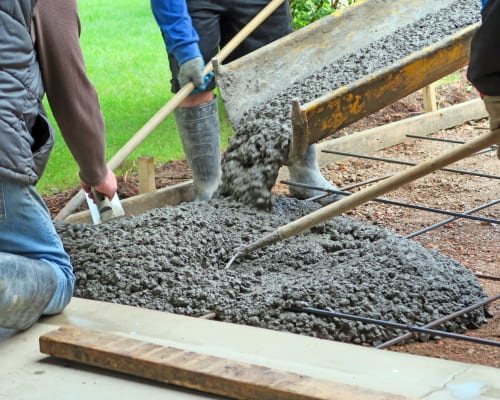
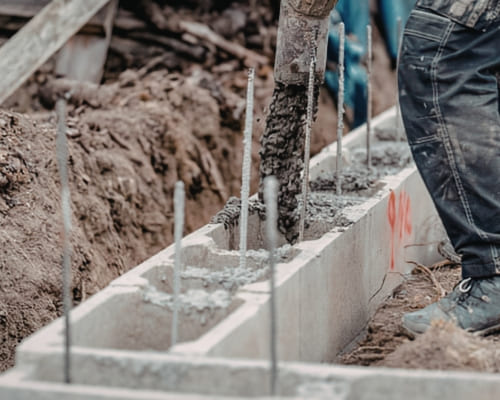
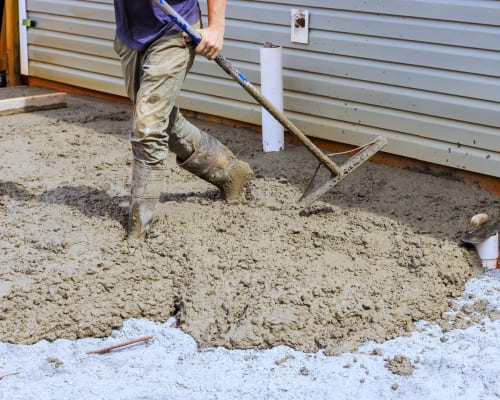
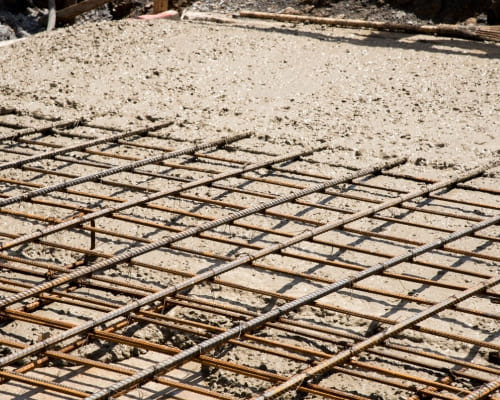
TESTIMONIALS
What Customers Say About Peak Concreting Frankston
Concreting in Frankston
FREQUENTLY ASKED QUESTIONS
Everything to know about concreting in Frankston
How much does concreting cost in Frankston?
Concreting in Frankston is priced per square metre, and the rate depends on the finish, the size of the area, access and the ground underneath. Plain broom-finished concrete is the most affordable option, coloured concrete and exposed aggregate sit above it, and stamped, honed and polished finishes cost more again because of the extra work involved. Removing old concrete, extra base preparation on soft or sandy ground and difficult access all add to the price. Every job gets a fixed written quote after an on-site look.
What concreting services are available around Frankston?
The full range of residential and commercial concreting: driveways, slabs and footings, paths, kerbs and edging, retaining walls, decorative finishes including exposed aggregate, coloured, stamped, honed and polished concrete, plus sealing, resurfacing and repairs.
Which suburbs does Peak Concreting Frankston cover?
Work is based in Frankston and covers the surrounding suburbs and the northern Mornington Peninsula, including Karingal, Frankston North, Frankston South, Seaford, Carrum Downs, Chelsea Heights, Waterways, Skye, Langwarrin, Langwarrin South, Mount Eliza, Mornington, Mount Martha, Moorooduc and Hastings. Each suburb page explains the local ground and the work most often done there.
Does concrete near the bay need anything different?
Yes. The sands close to the bay are loose, so the base must be properly compacted before the pour or the slab will settle. On the low ground around Seaford, Carrum Downs and Waterways the water table is high, so a deeper base, a moisture barrier and good drainage matter. Salt in the air and persistent moisture also make well-compacted, properly cured concrete with good cover over the steel more important, and sealing decorative finishes helps them last.
Is commercial concreting available as well as residential?
Yes. Alongside driveways, paths and house slabs, Peak Concreting Frankston pours commercial and light industrial concrete, including hardstands, car parks, kerbing, warehouse and workshop floors, and repairs to worn or damaged commercial slabs. Commercial work is planned around the business so that access and trading are disrupted as little as possible, and each slab is designed for the loads it will carry.
Is a council permit needed for a driveway or crossover in Frankston?
Concrete laid entirely inside the property boundary generally does not need a permit, although planning overlays or covenants on title can apply. A new, widened or replaced vehicle crossover between the boundary and the road does need a permit from the council and must be built to its standard: Frankston City Council for most of the area, the Mornington Peninsula Shire from Mount Eliza south, and the City of Kingston for Chelsea Heights and Waterways. The permit is arranged as part of the driveway job.
How thick should a concrete driveway be?
A standard residential driveway for cars is usually laid about 100mm thick on a compacted crushed-rock base and reinforced with steel mesh. Where caravans, boats, trucks or other heavy vehicles will park, the slab is made thicker and more heavily reinforced. On loose sand or soft ground the base is the critical part, and thickened edges help spread the load. The right specification for a site is set out in the written quote.
What is the difference between exposed aggregate, stamped and honed concrete?
All three are decorative finishes on a standard slab. Exposed aggregate washes back the surface to show the stones in the mix, giving a textured, non-slip finish that hides wear. Stamped concrete presses a pattern such as stone or slate into the surface while it is still workable. Honed concrete is ground back to a smooth, satin face that shows a little of the aggregate. Each is sealed to protect the finish.
How long does a concrete driveway or slab take?
Most residential driveways and slabs take one to three days on site for excavation, base preparation, formwork, the pour and finishing, depending on size, access and any old concrete to remove. Decorative finishes can add a day for washing back, cutting or sealing. After the pour, the concrete needs time to cure: light foot traffic after a day or two, and cars after about a week, with the timing confirmed for each job.
Can existing concrete be repaired instead of replaced?
Often, yes. If the slab is structurally sound, cracks can be filled and sealed, trip edges ground down and spalled areas patched through concrete repairs, and a tired surface can be renewed with concrete resurfacing. If the base has failed, roots have lifted large sections or the slab is badly broken, replacement is the better long-term option. An on-site look is the only reliable way to tell which applies.
Request A Free Quote
BUSINESS
SERVICES
OPERATING HOURS
Sun: 7:00am - 9:00pm
Mon: 7:00am - 9:00pm
Tue: 7:00am - 9:00pm
Wed: 7:00am - 9:00pm
Thu: 7:00am - 9:00pm
Fri: 7:00am - 9:00pm
Sat: 7:00am - 9:00pm